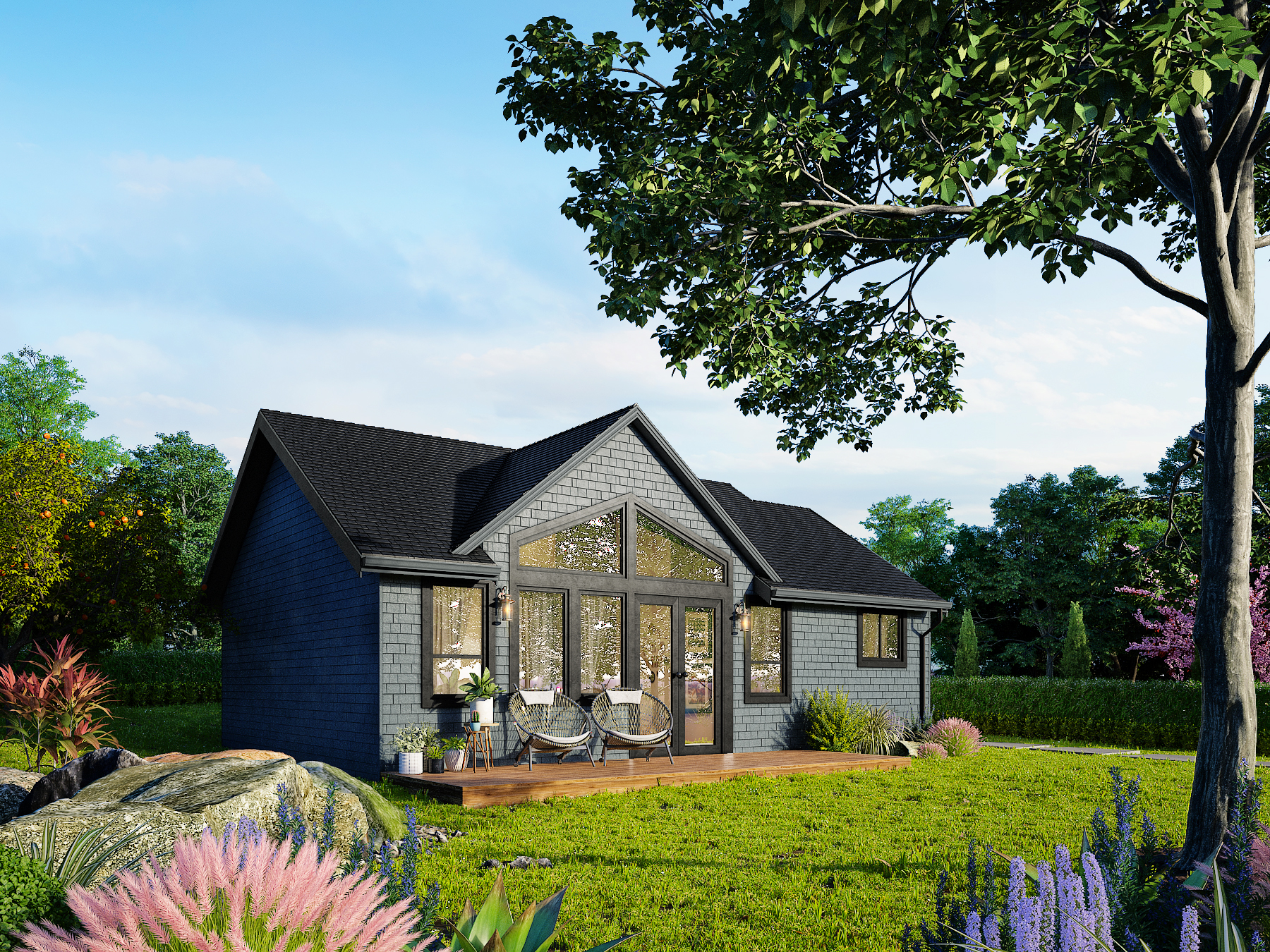
Generate Substantial Rental Income
Renting out a secondary dwelling can provide significant passive income depending on your location, unit size, and amenities. The region that you live in will have the most profound effect on the amount of rental income you can earn. Fortunately, the expected rental income will often align nicely with the cost of construction in your area. Many homeowners find that their investment pays for itself within several years through consistent rental revenue.
Alternatively, some homeowners choose to rent out a suite on their property using sites such as Airbnb or Vrbo. This option can provide a substantial secondary stream of revenue while allowing you to choose which days it is available for guests. This flexibility ensues you can still have the space available when friends or family come to visit.
Increase Your Property Value
According to the National Association of Realtors, properties with accessory dwelling units are priced approximately 35% higher on average than comparable homes without them in large metropolitan areas. Additionally, a 2025 Federal Housing Finance Agency study found that properties with these units appreciated 22% more than properties without them over a ten-year period. Research shows that well-designed secondary suites can add significant equity to your property, making them attractive to future buyers who see the income-generating potential.
Provide Multigenerational Living Options
Secondary suites allow aging parents to live independently while remaining close to family for support and caregiving. They also provide privacy for adult children returning home or extended family members who need their own space.
Create Flexible Living Space
Use your unit as a home office, art studio, gym, guest house, or personal retreat. The versatility means you can adapt the space as your needs change over time.
Support Affordable Housing
By adding density to existing neighborhoods, accessory dwelling units help address housing shortages without changing neighborhood character or requiring new infrastructure.
Enjoy Tax Benefits
Unit-related expenses may be tax-deductible as business expenses if you rent out the space, potentially providing additional financial advantages.
While regulations vary by jurisdiction, here are common considerations:
Size Limitations
Many jurisdictions allow secondary units up to 1,000 square feet, though some permit larger structures based on a percentage of the main home’s size (often 60% of the principal dwelling).
Number of Units Allowed
Depending on local codes, properties may be permitted one or two accessory units per lot, in addition to the main residence. Some areas allow both an attached and detached structure on the same property.
Parking Requirements
Many municipalities have eliminated parking requirements for accessory dwelling units to encourage their construction, though some still require one parking space per unit. Recent code changes in various jurisdictions reflect a trend toward reducing or eliminating these requirements entirely.
Owner Occupancy
Historically, many areas required the property owner to live in either the main house or the accessory unit. However, this requirement is being removed in numerous jurisdictions to make development more feasible.
Setback and Design Standards
Secondary dwellings typically must comply with setback requirements, though some jurisdictions allow reduced side-yard setbacks (as little as 3 feet with proper fire-rated construction) or permit units to be built directly on rear property lines when adjacent to alleys.
Design Compatibility
Many codes require that accessory units complement the architectural style of the main residence and blend into the neighborhood, avoiding duplex-like appearances. Materials, colors, and roof pitches often need to harmonize with the primary dwelling.